

She says it while tying her shoe.
Not crying. Not looking for reassurance. Almost casually.
Another dancer is stretching beside her.
“I literally can’t turn.”
Five minutes later:
“My legs look disgusting today.”
If you teach teenagers, none of this is particularly shocking.
We hear it so often that the response can become almost automatic.
“No, you don’t.”
“You’re a beautiful dancer.”
“Stop comparing yourself.”
“I wish you could see what I see.”
All said with love.
But what if confidence isn’t where the problem started?
What if, somewhere along the way, a dancer learned to use information about what she was doing as information about who she is?
Dance Teaches You to See Yourself
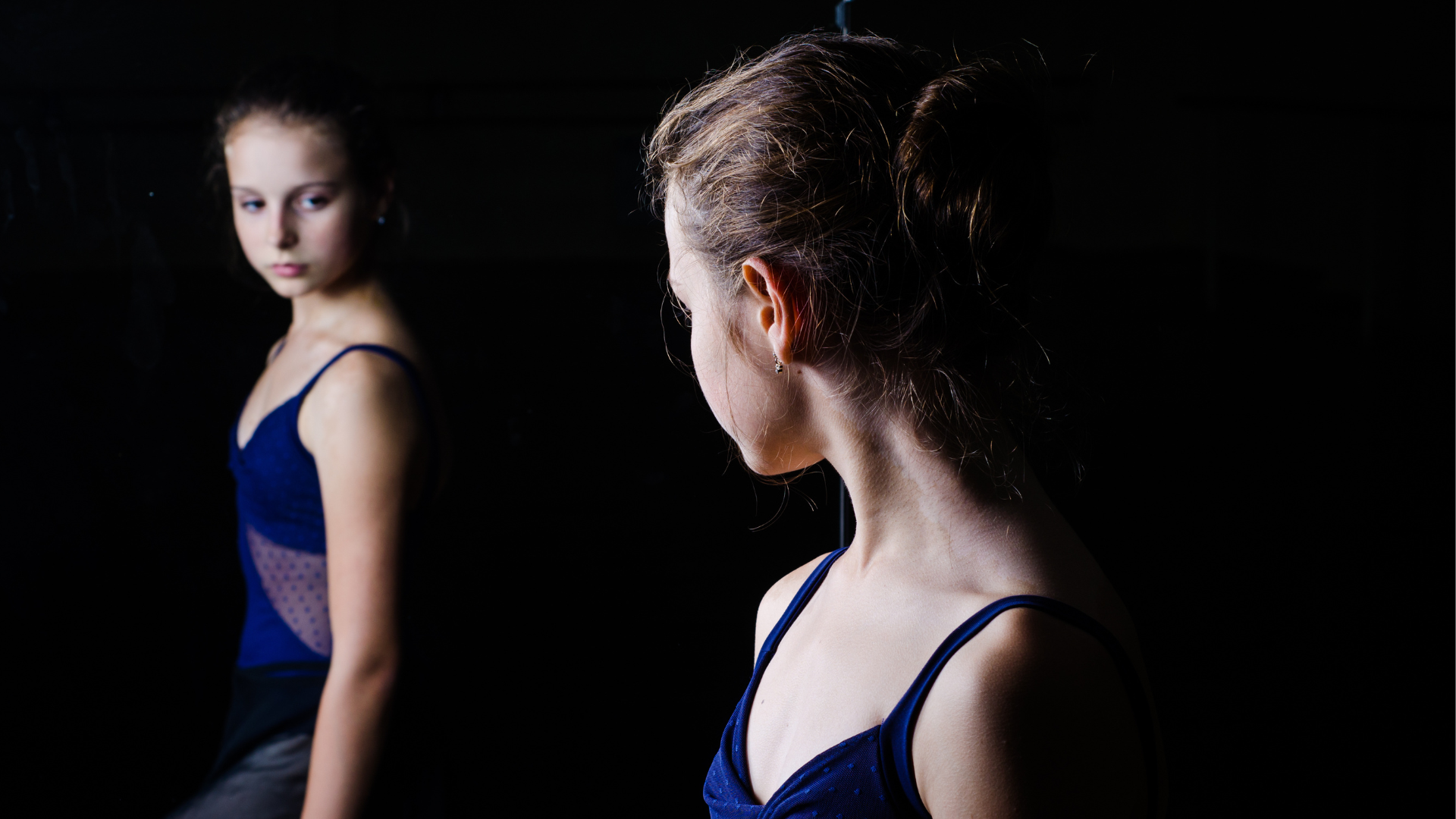
What isn't she noticing while she's watching herself?
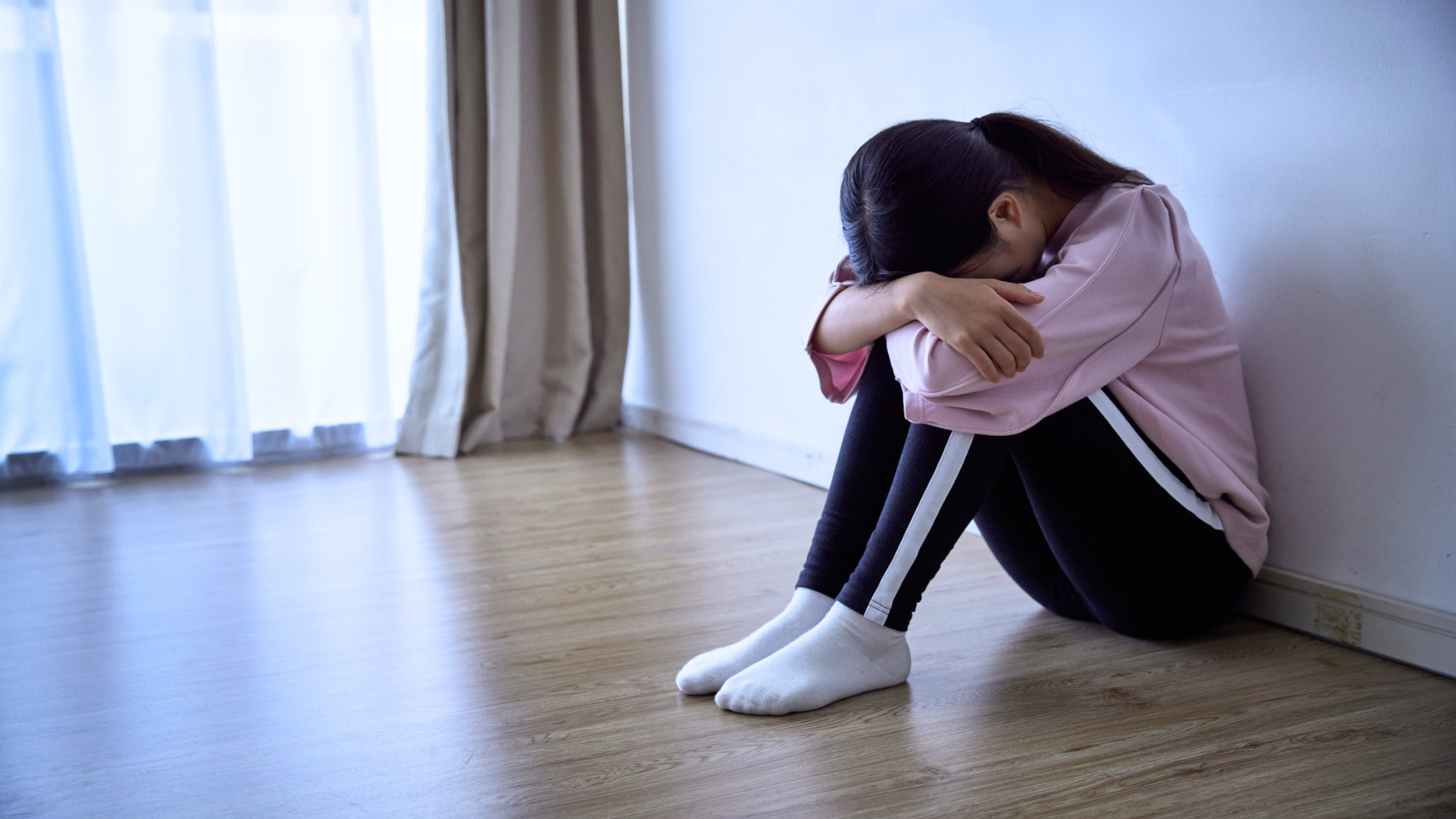
Keep the Correction Where it Belongs
What Does the Mirror Actually Know?

Turned in or turned out.
On balance or off.
Early or late.
Perhaps there is one more distinction worth teaching:
What happened to me is not the same question as what am I?
A mirror can tell a dancer something about her line.
A teacher can tell her something about her technique.
A cast list can tell her whether she got the role.
A score can tell her how a particular performance was evaluated.
Her tight chest can tell her something is happening.
The thought I’m not good enough can tell her what she is thinking.
All useful information.
But none can experience being her.
Eventually, every dancer has to leave the mirror anyway.
The lights come up.
She walks onto the stage.
The visual reference she may have spent thousands of hours consulting is gone.
And sometimes something beautiful happens there.
The correction disappears.
The mirror disappears.
The thought How am I doing? disappears.
Sometimes even the thought I am dancing disappears.
The music is still there.
The body is still moving.
Space, light, sound, breath.
And somehow there is simply being.
We call it flow.
Maybe what is interesting about flow isn’t only what appears.
It’s what disappears.
The measuring does.
And the dancer does not disappear with it.
There she is.
So, when a dancer says:
My body is disgusting.
I’m terrible.
I’m not good enough.
Maybe our job isn’t only to give her a kinder answer.
Maybe we can teach her to become as precise about her inner experience as she has learned to be about her technique.
What happened?
What did you notice?
What thought appeared?
And what are you making that mean about you?
Because a correction can tell her something about what she did.
A reflection can tell her something about what she sees.
A thought can tell her something about what she is thinking.
None of them can tell her what she is.
The mirror was never the problem.
The problem is asking a reflection to tell you something it cannot know.
References
Ainley, V., & Tsakiris, M. (2013).
Body conscious? Interoceptive awareness, measured by heartbeat perception, is
negatively correlated with self-objectification. PLOS ONE, 8(2), e55568.https://doi.org/10.1371/journal.pone.0055568
Pfeifer, J. H., Masten, C. L., Borofsky,
L. A., Dapretto, M., Fuligni, A. J., & Lieberman, M. D. (2009). Neural
correlates of direct and reflected self-appraisals in adolescents and adults:
When social perspective-taking informs self-perception. Child Development,
80(4), 1016–1038.https://doi.org/10.1111/j.1467-8624.2009.01314.x
Radell, S. A., Mandradjieff, M. P., Adame, D. D., & Cole, S. P. (2020). Impact of mirrors on body image of beginning modern and ballet students. Journal of Dance Medicine & Science, 24(3), 126–134.https://doi.org/10.12678/1089-313X.24.3.126
Nicole Langi
For more than twenty years, Nicole has worked as a professional dancer and educator, including teaching on the faculty of the Texas Ballet Theater School and performing with organizations such as the Utah Opera. Along the way, she noticed how quickly children learn to perform, please, and “keep up”—often long before they learn how to understand themselves.
Through her books, stories, and audio experiences, Nicole introduces children to the filters through which they experience life: sensations, thoughts, emotions, and beliefs. Her work gives children and the adults who love them a simple language for noticing what is happening inside.
Because a child can have a thought without being the thought. They can feel an emotion without becoming the emotion. And they can experience a difficult moment without allowing that moment to become the story of who they are.
Nicole’s work helps the next generation build a strong internal foundation—one rooted in curiosity rather than judgment—and stay connected to who they are before the world tells them who to be.
Nicole lives in Texas with her family.
Explore her books, audio experiences, and resources at danceembodiment.com

hello@danscend.com
Phone number: 213-770-1226