

“Dancer”: the image brings to mind a moving body in the studio, a tutu under stage lights, mirrors and barres. Yet dancers exist outside these contexts and images…crazy idea, I know. Dancers are people, with (ideally) full lives outside of the studio: families, friends, hurts, loves, the list goes on.
Some dancers, not to mention their teachers, may believe that hyperfocusing on the craft – spending as much time in the studio as possible, taking every training and performance opportunity that comes one’s way – is the way to go. Yet living a full life outside of the studio may actually be what nurtures the artist behind the dancer, not to mention keeps them balanced as a person.
Let’s take a look at reasons for encouraging your dance students to invest time, focus, and energy in things that they love outside of dance – and how you can do that in your studio!
Some dancers, not to mention their teachers, may believe that hyperfocusing on the craft – spending as much time in the studio as possible, taking every training and performance opportunity that comes one’s way – is the way to go. Yet living a full life outside of the studio may actually be what nurtures the artist behind the dancer, not to mention keeps them balanced as a person.
Let’s take a look at reasons for encouraging your dance students to invest time, focus, and energy in things that they love outside of dance – and how you can do that in your studio!
Dancer identity formation
“Behavioral activation”: bolstering mental health, present and future
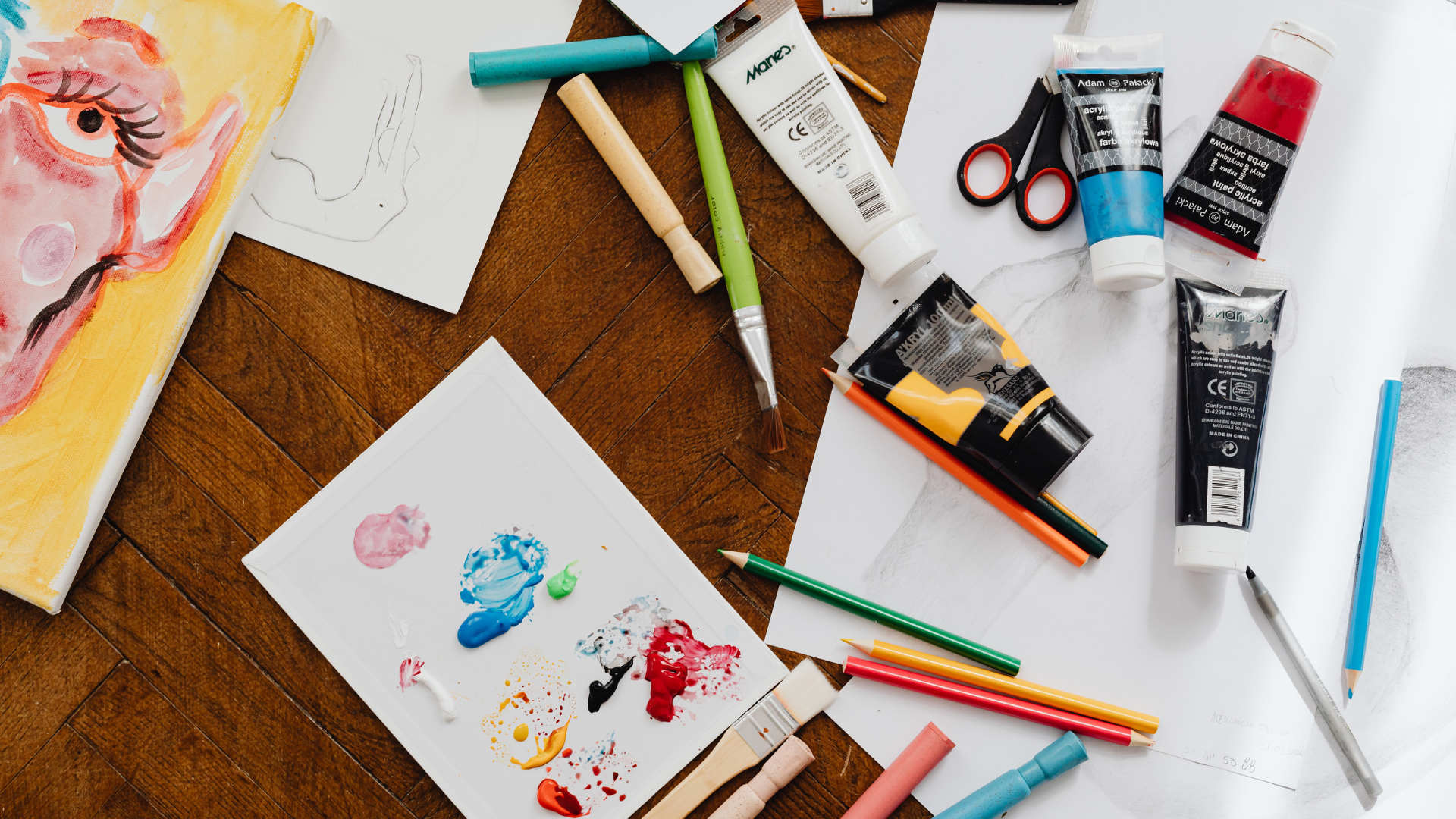
Dancers doing things they love apart from dance – be it another art form, reading, volunteering, playing a sport, et cetera – is behavioral activation: what some psychologists call doing favorite activities to boost mood and even ease experiences such as depression, loneliness, and anxiety. Research from Pepin et al validates how such endeavors can reduce social isolation and loneliness, and from Wang and Feng how they can help manage depression.
Most crucially here, arguably, behavioral activation can ease the process of identity reformation after loss (Papa et al). Some hard truths: dancers get injured. Like Jackson Rego, they may become parents, and stop dancing through the later months of pregnancy and some of the postpartum period. They retire from the stage, and even – for various reasons – may stop dancing entirely (which can be a difficult experience whether or not it is by choice). With dance as such a poignantly treasured part of life for those who do it, this is loss.
When such loss occurs, it can be easier for dancers to emotionally manage if they can engage with other things they love – things to occupy their minds, bodies, and spirits. Consider this: a dancer with an injury sits home icing and watching Netflix, feeling a flood of difficult emotions (nothing wrong with any of that, to be clear) versus reading novels and articles on topics and disciplines that interest them.
Jackson Rego, for one, describes reframing her time once spent in the studio to quieter times at home gaming, reading, or cross-stitching (when not caring for her baby son, of course) – and unequivocally, she is still a “dancer”, she says. “I doubt that will ever change, but that is just a piece of my story.”
The things dancers might feel when life takes them away from dance? 100% valid, and feelings we most often need to work through. Yet having other aspects of themselves to call upon – painter, athlete, writer, what have you – can offer a little relief.
Most crucially here, arguably, behavioral activation can ease the process of identity reformation after loss (Papa et al). Some hard truths: dancers get injured. Like Jackson Rego, they may become parents, and stop dancing through the later months of pregnancy and some of the postpartum period. They retire from the stage, and even – for various reasons – may stop dancing entirely (which can be a difficult experience whether or not it is by choice). With dance as such a poignantly treasured part of life for those who do it, this is loss.
When such loss occurs, it can be easier for dancers to emotionally manage if they can engage with other things they love – things to occupy their minds, bodies, and spirits. Consider this: a dancer with an injury sits home icing and watching Netflix, feeling a flood of difficult emotions (nothing wrong with any of that, to be clear) versus reading novels and articles on topics and disciplines that interest them.
Jackson Rego, for one, describes reframing her time once spent in the studio to quieter times at home gaming, reading, or cross-stitching (when not caring for her baby son, of course) – and unequivocally, she is still a “dancer”, she says. “I doubt that will ever change, but that is just a piece of my story.”
The things dancers might feel when life takes them away from dance? 100% valid, and feelings we most often need to work through. Yet having other aspects of themselves to call upon – painter, athlete, writer, what have you – can offer a little relief.

When one is no longer pirouetting and pas de bourréeing, the question can become, “Who am I, if not ‘dancer?” Of course, dancers are also sisters, brothers, daughters, sons, mothers, wives, husbands, et cetera…and simply people. That is enough! Yet, as behavioral activation research supports, tangible aspects of identity – visual artist, photographer, book club member, et cetera et cetera – can be fortifying. It can make missing the studio and stage sting a bit less.
Dancers can, of course, face a variety of issues far before they might get injured, leave the stage, have a child, et cetera, et cetera. If they only have dance as a form of activity to ease the heart and mind when things get tough, then they may very well be missing a key tool in their mental/emotional health toolbox. Ergo, such activities can be a protective factor for the future as well as conducive to better mental health for dancers at any time.
Dancers can, of course, face a variety of issues far before they might get injured, leave the stage, have a child, et cetera, et cetera. If they only have dance as a form of activity to ease the heart and mind when things get tough, then they may very well be missing a key tool in their mental/emotional health toolbox. Ergo, such activities can be a protective factor for the future as well as conducive to better mental health for dancers at any time.
Artistry
Engaging in activities outside of dance might also make dancers better artists. Becoming knowledgeable in other disciplines can offer perspectives and subject matter that can broaden creativity; one can bring fresh viewpoints and content to the art form that audiences may never have seen coming.
Exhibit A: Boston-based dance artist Madison Florence works in museum sciences, supporting programming on space (as in planets, stars, and the like). She presented her first evening-length work this year, telling the stories of female-identifying scientists and calling upon celestial imagery. It was imaginative, thought-provoking, and not quite like anything I've ever seen before.
Dancers might also gain a fruitful creative passion for something within dance that’s not performing. Rhode Island-based dancer/choreographer Deanna Gerde has, in recent years, added Costume Design to her resume. “Curating and building costumes was a natural place to be drawn to because I have always been excited about expression through clothing,” she recounts.
“Every time I take on a new project, I learn more about what works well, and what techniques I want to dive deeper into. Not to mention, altering and editing my own wardrobe continues to be a fun project in itself,” she adds. Thus, for Gerde, an interest in expression through clothing developed into another stream of employment, a craft to challenge and interest her, and plain enjoyment.
Exhibit A: Boston-based dance artist Madison Florence works in museum sciences, supporting programming on space (as in planets, stars, and the like). She presented her first evening-length work this year, telling the stories of female-identifying scientists and calling upon celestial imagery. It was imaginative, thought-provoking, and not quite like anything I've ever seen before.
Dancers might also gain a fruitful creative passion for something within dance that’s not performing. Rhode Island-based dancer/choreographer Deanna Gerde has, in recent years, added Costume Design to her resume. “Curating and building costumes was a natural place to be drawn to because I have always been excited about expression through clothing,” she recounts.
“Every time I take on a new project, I learn more about what works well, and what techniques I want to dive deeper into. Not to mention, altering and editing my own wardrobe continues to be a fun project in itself,” she adds. Thus, for Gerde, an interest in expression through clothing developed into another stream of employment, a craft to challenge and interest her, and plain enjoyment.

And this writer? If you know me well, you know I am obsessed with all things J.R.R. Tolkien and Arda (his imagined world that includes Middle Earth…I know, I know, super niche and nerdy…but I like that, personally!). I have been making short dances set to scores from adaptations of Tolkien works, guided by the aesthetic and feel of the realms of his world (check out my Instagram if you’re curious!).
I do think it’s some of my strongest dancing and choreographic work. I’ve also never seen anyone doing anything quite like it. To shamelessly pat myself on the back just a bit, through these works I’ve contributed something unique to the Tolkien fandom as well as the dance field. It would never have happened if I hadn't became enamored of a world of hobbits, Elves, dwarves, and dragons.
Other disciplines could even enhance dancers’ technique through alternate routes to understanding. Case in point: in school I hated math, yet geometry enhanced my understanding of the shaping of ballet technique. Physics helped me understand why the floor is one’s friend, so use it well (it blew my mind to learn that effectively, the floor gives back the energy we push into it…I know, wow!).
All of that considered, Gerde puts it well: “I think having interests and passions outside of the dance studio is essential to the work. We are always human first, and who we are directly informs the art we produce.”
I do think it’s some of my strongest dancing and choreographic work. I’ve also never seen anyone doing anything quite like it. To shamelessly pat myself on the back just a bit, through these works I’ve contributed something unique to the Tolkien fandom as well as the dance field. It would never have happened if I hadn't became enamored of a world of hobbits, Elves, dwarves, and dragons.
Other disciplines could even enhance dancers’ technique through alternate routes to understanding. Case in point: in school I hated math, yet geometry enhanced my understanding of the shaping of ballet technique. Physics helped me understand why the floor is one’s friend, so use it well (it blew my mind to learn that effectively, the floor gives back the energy we push into it…I know, wow!).
All of that considered, Gerde puts it well: “I think having interests and passions outside of the dance studio is essential to the work. We are always human first, and who we are directly informs the art we produce.”

Encouraging more multi-faceted dancers
So there you have it: dancers often form identities as “dancer” fairly young, and because of that hyperfocus on the artform – yet engaging in activities outside of dance can contribute to improved mental health, presently and very potentially in their futures, and even make them stronger artists.
As a dance educator, how can you encourage your students to nurture their relationship with things they love outside of dance? How can you balance that with them spending sufficient time in-studio? Let’s take a look at a few approaches.
1. Be thoughtful about how you're scheduling your dancers. Evaluate it when you can.
How much are you asking your dancers to be in-studio? What are you requiring and what is elective? Do upper-level dancers feasibly have space and time in their lives to do things outside of dance? If the answer to that is no, is there a way that you can open up some of that space?
I give no commands or prescriptions – only questions to consider. You know your studio and your students best. Anytime can be a good time for these questions, but perhaps when studios are scheduling for the following semester or academic year is the ideal occasion.
2. Present doing things outside of dance as not only acceptable, but a positive thing.
Ask dancers about their recent track meet or the book they’re reading (as is appropriate in the teacher/student relationship, of course); take an interest in what they do and who they are outside of dance. Model being a multi-faceted person, as is fitting – what do you enjoy outside of dance that you could share with your dance students?
Be reasonable with absences. Of course, you’re reasonable, dear reader, but just to say that it could also be helpful to consider attendance policies; what happens if a dancer misses class because of a musical theater “tech week”, and is that supportive of the dancer as an artist and young person? Again, that’s for you as educators and studio owners to decide. I only offer the question.
3. Incorporate other endeavors and disciplines into your choreography.
I’ll never forget dancing in a competition lyrical piece focused on the marginalization of Indigenous Americans. It’s not an exaggeration to say that it made me a stronger dancer as well as a young person growing more conscious of history, power, and oppression.
How might you similarly call upon other intellectual disciplines to educate and inspire growth in your dancers? How could you get creative with incorporating other movement disciplines – from sports to other athletic arts such as skating? Bonus: you may also make your choreography fresher and more engaging.
You never know, you might just introduce one or more of your students to something that they could fall in love with. They can be in love with that and dance at the same time; as people, our hearts are big enough. It can get trickier with schedules, budgets, and energy levels – but luckily dancers are often resourceful and adaptive enough to figure those things out.
Having things apart from tendus to challenge their bodies and stimulate their minds, dancers can more gracefully face current hardships as well as future changes in their relationship with dance.
Once a dancer, always a dancer – I truly believe it. That can also be, again, “dancer+”. Involvement in things outside of dance can help dancers see that, and from that grow into the strongest artists and people they can be. Your dancers armed with paintbrushes, books, soccer cleats, and beyond? The sky could be their limit.
As a dance educator, how can you encourage your students to nurture their relationship with things they love outside of dance? How can you balance that with them spending sufficient time in-studio? Let’s take a look at a few approaches.
1. Be thoughtful about how you're scheduling your dancers. Evaluate it when you can.
How much are you asking your dancers to be in-studio? What are you requiring and what is elective? Do upper-level dancers feasibly have space and time in their lives to do things outside of dance? If the answer to that is no, is there a way that you can open up some of that space?
I give no commands or prescriptions – only questions to consider. You know your studio and your students best. Anytime can be a good time for these questions, but perhaps when studios are scheduling for the following semester or academic year is the ideal occasion.
2. Present doing things outside of dance as not only acceptable, but a positive thing.
Ask dancers about their recent track meet or the book they’re reading (as is appropriate in the teacher/student relationship, of course); take an interest in what they do and who they are outside of dance. Model being a multi-faceted person, as is fitting – what do you enjoy outside of dance that you could share with your dance students?
Be reasonable with absences. Of course, you’re reasonable, dear reader, but just to say that it could also be helpful to consider attendance policies; what happens if a dancer misses class because of a musical theater “tech week”, and is that supportive of the dancer as an artist and young person? Again, that’s for you as educators and studio owners to decide. I only offer the question.
3. Incorporate other endeavors and disciplines into your choreography.
I’ll never forget dancing in a competition lyrical piece focused on the marginalization of Indigenous Americans. It’s not an exaggeration to say that it made me a stronger dancer as well as a young person growing more conscious of history, power, and oppression.
How might you similarly call upon other intellectual disciplines to educate and inspire growth in your dancers? How could you get creative with incorporating other movement disciplines – from sports to other athletic arts such as skating? Bonus: you may also make your choreography fresher and more engaging.
You never know, you might just introduce one or more of your students to something that they could fall in love with. They can be in love with that and dance at the same time; as people, our hearts are big enough. It can get trickier with schedules, budgets, and energy levels – but luckily dancers are often resourceful and adaptive enough to figure those things out.
Having things apart from tendus to challenge their bodies and stimulate their minds, dancers can more gracefully face current hardships as well as future changes in their relationship with dance.
Once a dancer, always a dancer – I truly believe it. That can also be, again, “dancer+”. Involvement in things outside of dance can help dancers see that, and from that grow into the strongest artists and people they can be. Your dancers armed with paintbrushes, books, soccer cleats, and beyond? The sky could be their limit.
Works Cited
Farello et al. “Journey to the top: The non-linear path of identity foreclosure and exploration and its implications for mental health in female professional athletes”. Journal of Applied Sport Psychology, 2025 February.
Feng and Weng. “A Narrative Review of Empirical Literature of Behavioral Activation Treatment for Depression”. Front Psychiatry, 2022 April.
Papa et al. “Behavioral Activation for Pathological Grief”. Death Studies, 2013 May.
Pepin et al. “Modifying Behavioral Activation to Reduce Social Isolation and Loneliness Among Older Adults”. American Journal of Geriatric Psychiatry, 2021 August.
Feng and Weng. “A Narrative Review of Empirical Literature of Behavioral Activation Treatment for Depression”. Front Psychiatry, 2022 April.
Papa et al. “Behavioral Activation for Pathological Grief”. Death Studies, 2013 May.
Pepin et al. “Modifying Behavioral Activation to Reduce Social Isolation and Loneliness Among Older Adults”. American Journal of Geriatric Psychiatry, 2021 August.
Kathryn Boland, MA, R-DMT
Kathryn Boland is a long-time dancer, movement educator and writer/journalist. Kathryn writes regularly for Dance Informa, and has contributed to various other sources: including Dance Magazine, Dance Teacher Magazine, Pointe, and Milestones in Dance History (Routledge University Press, October 2022).
Outside of work, she enjoys taking dance classes, music, reading, time in nature, and a cup of coffee with a good friend.

Get in Touch!
hello@danscend.com
Phone number: 213-770-1226
hello@danscend.com
Phone number: 213-770-1226
Copyright © 2026