

Dance training is often described using words such as discipline, excellence, and resilience. These qualities are rightly valued, yet far less attention is given to the environments in which they are shaped, and how different nervous systems experience the same training conditions in very different ways.
This is particularly relevant within dance teacher training, where learning environments and communication styles directly influence both development and dancer mental health.
When we talk about neurodivergent dancers, we are not referring to a small or separate group. Neurodiversity describes natural variation in how human brains process information, emotion, sensory input, and stress. In the dance studio, where pressure, repetition, and evaluation are constant, these differences tend to become more visible.
Some dancers adapt quickly to fast-paced instruction and frequent correction. Others need time to process, integrate, and embody information. Some respond well to direct verbal feedback, while others learn more effectively through demonstration, imagery, or physical sensation. None of these approaches are right or wrong. They are simply different.
This article explores how training environments shape behavior and mindset, why some dancers struggle in ways that are often misunderstood, and how teachers can support learning and resilience without lowering artistic or technical standards.
Clarifying the Language
Neurodiversity refers to the natural variation in how human brains develop and function. It includes differences in attention, sensory processing, emotional regulation, learning style, and stress response.
Neurodivergent describes an individual whose neurological profile differs from what is currently considered typical or expected within a given environment.
These terms are descriptive, not diagnostic, and they are not value judgments. They do not describe ability, motivation, or character. They simply acknowledge that brains are not uniform, and that training environments interact with those differences in powerful ways.
When used accurately, this language helps us understand behavior in context. When used dismissively or sarcastically, it obscures learning and reinforces misunderstanding.
Neurodivergent describes an individual whose neurological profile differs from what is currently considered typical or expected within a given environment.
These terms are descriptive, not diagnostic, and they are not value judgments. They do not describe ability, motivation, or character. They simply acknowledge that brains are not uniform, and that training environments interact with those differences in powerful ways.
When used accurately, this language helps us understand behavior in context. When used dismissively or sarcastically, it obscures learning and reinforces misunderstanding.
Neurodiversity and the Dance Studio
Every dancer enters the studio with a unique nervous system. That system governs attention, emotional regulation, sensory sensitivity, and stress response. It also influences how feedback is received and how learning is stored.
Traditional teaching models often assume a fairly narrow range of learning responses. The dancer is expected to listen, apply, and repeat. When a dancer falls outside this range, behaviors may be interpreted as lack of focus, overthinking, emotional sensitivity, or poor attitude.
In many cases, these behaviors are not traits of the dancer. They are responses to the environment itself.
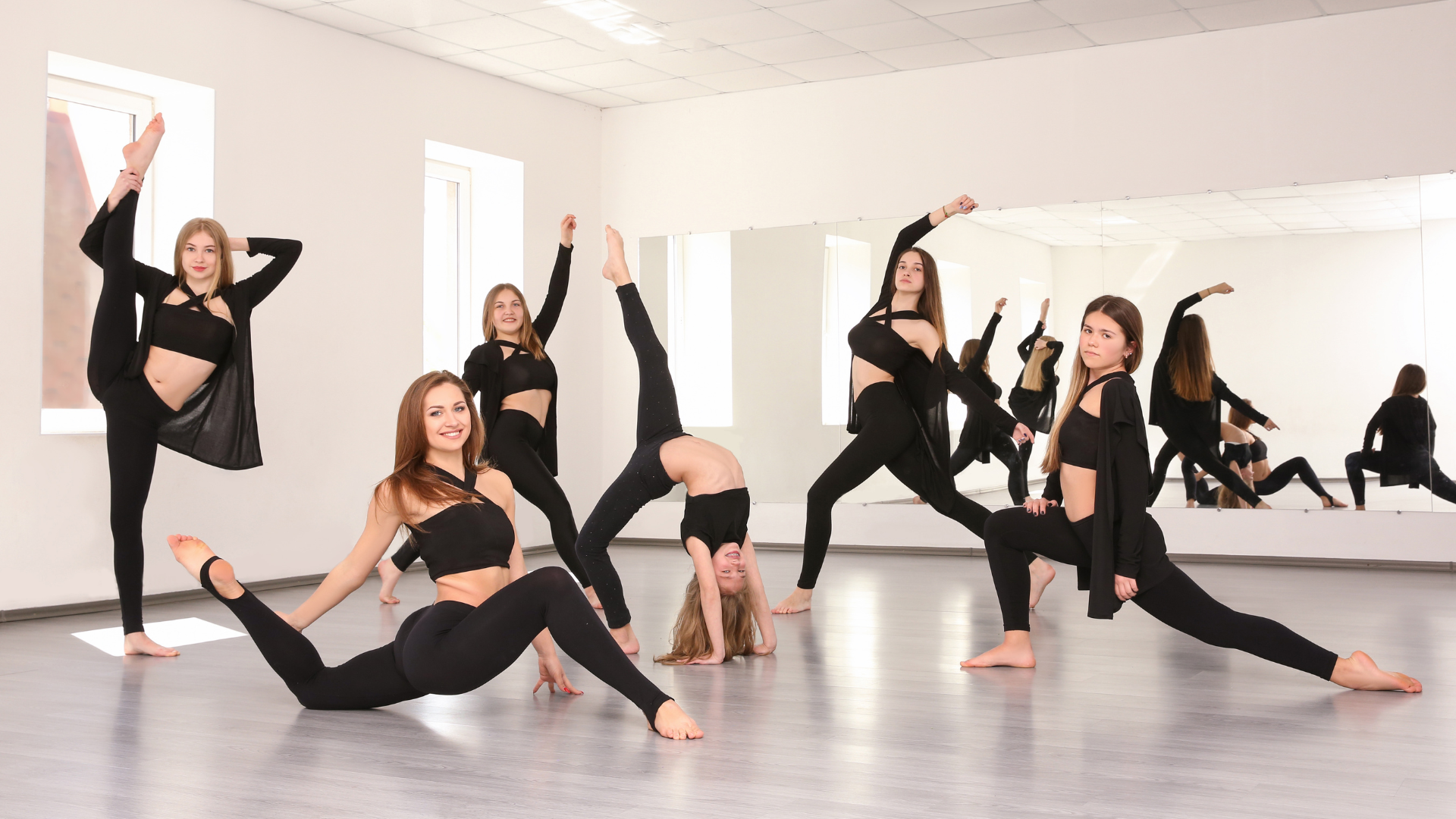
The dance studio is not a neutral space. It is a social and emotional environment as much as a physical one. Tone of voice, timing of corrections, pace of delivery, facial expression, and even silence all send signals that the nervous system responds to automatically.
For dancers, this may feel like pressure, confusion, or internal overload. For teachers, it may appear as inconsistency, hesitation, or disengagement. The gap between these two perspectives is where misunderstanding often begins.
Traditional teaching models often assume a fairly narrow range of learning responses. The dancer is expected to listen, apply, and repeat. When a dancer falls outside this range, behaviors may be interpreted as lack of focus, overthinking, emotional sensitivity, or poor attitude.
In many cases, these behaviors are not traits of the dancer. They are responses to the environment itself.
The dance studio is not a neutral space. It is a social and emotional environment as much as a physical one. Tone of voice, timing of corrections, pace of delivery, facial expression, and even silence all send signals that the nervous system responds to automatically.
For dancers, this may feel like pressure, confusion, or internal overload. For teachers, it may appear as inconsistency, hesitation, or disengagement. The gap between these two perspectives is where misunderstanding often begins.
When Behavior Is Misread
In high-intensity training, behavior is often treated as evidence of motivation, discipline, or character. A dancer who freezes when corrected may be labeled anxious. A dancer who asks repeated questions may be seen as insecure. A dancer who appears distracted may be judged as disengaged or uncommitted.
From a nervous system perspective, behavior is an output, not a cause. What we see on the surface reflects how safe, regulated, and resourced the dancer feels in that moment.
For example, a teacher may deliver several rapid corrections across the room, expecting dancers to absorb and apply them immediately. One dancer integrates the information quickly. Another pauses, misses part of the sequence, and freezes when attention returns to them. This may be interpreted as lack of preparation or confidence, when in reality the dancer’s processing capacity has been exceeded in that moment.
These responses are not choices. They are automatic, embodied reactions shaped by experience, expectation, and context.
Understanding this shifts the question from “What is wrong with this dancer?” to “What is happening in this environment, right now?”
From a nervous system perspective, behavior is an output, not a cause. What we see on the surface reflects how safe, regulated, and resourced the dancer feels in that moment.
For example, a teacher may deliver several rapid corrections across the room, expecting dancers to absorb and apply them immediately. One dancer integrates the information quickly. Another pauses, misses part of the sequence, and freezes when attention returns to them. This may be interpreted as lack of preparation or confidence, when in reality the dancer’s processing capacity has been exceeded in that moment.
These responses are not choices. They are automatic, embodied reactions shaped by experience, expectation, and context.
Understanding this shifts the question from “What is wrong with this dancer?” to “What is happening in this environment, right now?”

Training Environments as Amplifiers
Dance training is intense by design. Repetition, scrutiny, comparison, hierarchy, and public correction are built into the structure. These conditions develop precision and discipline, but they also amplify nervous system responses.
A calm, focused environment can support learning, confidence, and curiosity. A tense, rushed, or inconsistent one can magnify anxiety, self-doubt, and fear of failure.
Small cues matter. A sigh, a raised eyebrow, a delayed correction, or a comment delivered while walking away can land very differently depending on the dancer receiving it. What feels neutral to one dancer may feel critical or overwhelming to another.
Teachers often underestimate the emotional weight of their presence. Dancers, particularly those with perfectionist tendencies or high sensitivity, absorb feedback quickly and deeply. Over time, this creates a powerful feedback loop between teacher and dancer, shaping not only technique but belief.
A calm, focused environment can support learning, confidence, and curiosity. A tense, rushed, or inconsistent one can magnify anxiety, self-doubt, and fear of failure.
Small cues matter. A sigh, a raised eyebrow, a delayed correction, or a comment delivered while walking away can land very differently depending on the dancer receiving it. What feels neutral to one dancer may feel critical or overwhelming to another.
Teachers often underestimate the emotional weight of their presence. Dancers, particularly those with perfectionist tendencies or high sensitivity, absorb feedback quickly and deeply. Over time, this creates a powerful feedback loop between teacher and dancer, shaping not only technique but belief.

Dance Teacher Training and Dancer Mental Health
Within dance teacher training, these dynamics are rarely taught explicitly, yet they sit at the core of dancer mental health and long-term development.
Teaching is not only about what is delivered, but how it is received. The same correction can either support learning or trigger stress, depending on timing, tone, and context.
Specific, process-focused feedback supports integration. Clear structure supports attention. Predictability reduces unnecessary cognitive load. These are not soft skills. They are central teaching tools.
Importantly, these approaches benefit all dancers, not only those who identify as neurodivergent.
Teaching is not only about what is delivered, but how it is received. The same correction can either support learning or trigger stress, depending on timing, tone, and context.
Specific, process-focused feedback supports integration. Clear structure supports attention. Predictability reduces unnecessary cognitive load. These are not soft skills. They are central teaching tools.
Importantly, these approaches benefit all dancers, not only those who identify as neurodivergent.
Neuroplasticity and Learning

Epigenetics and Long-Term Impact
Epigenetics adds another layer to this picture. Research shows that environments influence how genes are expressed over time. Chronic stress does not change DNA, but it can alter how the body regulates energy, focus, recovery, and resilience.
In practical terms, prolonged exposure to pressured or unpredictable environments can affect how dancers cope with fatigue, injury, and mental load. This may show up as burnout, recurring injury, or difficulty recovering both physically and emotionally.
Again, this is not about blame. It is about understanding impact.
Training environments leave traces. They extend beyond the studio and into a dancer’s wider life and career.
In practical terms, prolonged exposure to pressured or unpredictable environments can affect how dancers cope with fatigue, injury, and mental load. This may show up as burnout, recurring injury, or difficulty recovering both physically and emotionally.
Again, this is not about blame. It is about understanding impact.
Training environments leave traces. They extend beyond the studio and into a dancer’s wider life and career.
What This Means for Teachers

Resilience as a Shared Process
Resilience is often framed as an individual responsibility. Dancers are expected to cope, adapt, and push through. From a nervous system perspective, resilience grows through relationship.
Co-regulation, clarity, and consistency create the conditions in which dancers can stretch, adapt, and recover. When challenge is paired with support, resilience becomes sustainable rather than costly.
The studio becomes not just a place of correction, but a place of collaboration and growth.
When teachers and dancers recognize their shared influence on the learning environment, excellence is no longer achieved at the expense of well-being.
Co-regulation, clarity, and consistency create the conditions in which dancers can stretch, adapt, and recover. When challenge is paired with support, resilience becomes sustainable rather than costly.
The studio becomes not just a place of correction, but a place of collaboration and growth.
When teachers and dancers recognize their shared influence on the learning environment, excellence is no longer achieved at the expense of well-being.
Conclusion
References
Core neurodiversity and neuroscience
Armstrong, T. (2010). The Power of Neurodiversity. Da Capo Press.
Singer, J. (1999). Why can’t you be normal for once in your life? In M. Corker & S. French (Eds.), Disability Discourse. Open University Press.
American Psychological Association. (2023). Neurodiversity. APA Dictionary of Psychology.
Nervous system, stress, and learning
Porges, S. W. (2011). The Polyvagal Theory. W. W. Norton & Company.
Siegel, D. J. (2012). The Developing Mind. Guilford Press.
McEwen, B. S. (2007). Physiology and neurobiology of stress and adaptation. Physiological Reviews, 87(3), 873–904.
Neuroplasticity and embodied learning
Doidge, N. (2007). The Brain That Changes Itself. Penguin.
Kolb, B., & Gibb, R. (2011). Brain plasticity and behaviour in the developing brain. Journal of the Canadian Academy of Child and Adolescent Psychiatry, 20(4), 265–276.
Epigenetics and environment
Meaney, M. J. (2010). Epigenetics and the biological definition of gene–environment interactions. Child Development, 81(1), 41–79.
Yehuda, R., & Lehrner, A. (2018). Intergenerational transmission of trauma effects. World Psychiatry, 17(3), 243–257.
Education, performance, and applied settings
Immordino Yang, M. H., & Damasio, A. (2007). We feel, therefore we learn. Mind, Brain, and Education, 1(1), 3–10.
Davis, J. L., & McEwen, B. S. (2019). Stress, cognition, and learning. Nature Reviews Neuroscience, 20, 434–445.
Armstrong, T. (2010). The Power of Neurodiversity. Da Capo Press.
Singer, J. (1999). Why can’t you be normal for once in your life? In M. Corker & S. French (Eds.), Disability Discourse. Open University Press.
American Psychological Association. (2023). Neurodiversity. APA Dictionary of Psychology.
Nervous system, stress, and learning
Porges, S. W. (2011). The Polyvagal Theory. W. W. Norton & Company.
Siegel, D. J. (2012). The Developing Mind. Guilford Press.
McEwen, B. S. (2007). Physiology and neurobiology of stress and adaptation. Physiological Reviews, 87(3), 873–904.
Neuroplasticity and embodied learning
Doidge, N. (2007). The Brain That Changes Itself. Penguin.
Kolb, B., & Gibb, R. (2011). Brain plasticity and behaviour in the developing brain. Journal of the Canadian Academy of Child and Adolescent Psychiatry, 20(4), 265–276.
Epigenetics and environment
Meaney, M. J. (2010). Epigenetics and the biological definition of gene–environment interactions. Child Development, 81(1), 41–79.
Yehuda, R., & Lehrner, A. (2018). Intergenerational transmission of trauma effects. World Psychiatry, 17(3), 243–257.
Education, performance, and applied settings
Immordino Yang, M. H., & Damasio, A. (2007). We feel, therefore we learn. Mind, Brain, and Education, 1(1), 3–10.
Davis, J. L., & McEwen, B. S. (2019). Stress, cognition, and learning. Nature Reviews Neuroscience, 20, 434–445.
Terry Hyde, MA, MBACP
Patrick Jones, a Latin professor at Hampden-Sydney College in Virginia, looked up one of the more obscure Latin words, consectetur, from a Lorem Ipsum passage, and going through the cites of the word in classical literature, discovered the undoubtable source.

Get in Touch!
hello@danscend.com
Phone number: 213-770-1226
hello@danscend.com
Phone number: 213-770-1226
Copyright © 2026