
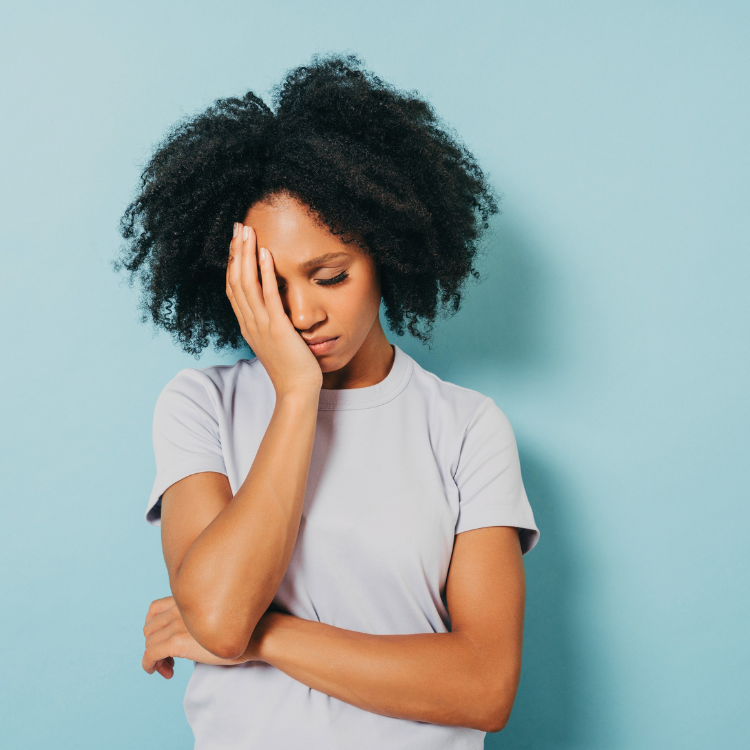
So many parts of our lives are impacted by how we are able to cope with stress - including dancer mental health. Dance is largely a performance-based industry that relies heavily on the ability to, quite literally, perform under pressure and whether it’s a dance audition for a college or the first preview of a new show, stress has its mark all over the dance industry. A dancer's ability to keep cool under pressure can heavily impact not only their success, but also the way they feel about themselves as well.
We often see stress begin to impact dancer mental health in teenage dancers. And for good reason. Teenagers are more stressed now than they have been in the past. For many reasons. The American Psychological Association reports that 81 percent of Gen Z teens (ages 13–17) experienced more intense stress during the pandemic. And, according to the 2022 Stress in America report, more than two-thirds of parents of teens said they felt their children would have benefited from mental health treatment since the pandemic started.
A 2022 poll on teen stress by Navigate 360 showed that 58 percent of teens are “very concerned” or “somewhat concerned” about their own mental and emotional health. But also this survey showed that young folks want to learn more about how to cope with their stress and 57 percent of adolescents polled said they would like to take short courses at school on stress management skills.
That's a lot of stressed dancers.
Dance teachers, stress, and dancer mental health
Preparing for stress

Wait. You can prepare for stress? Why yes. Yes, you can. Stress can creep up at any moment, but there are a number of ways to reduce the amount of stress dancers (and you!) experience in situations before they occur. In fact, one of the best ways to help dancers cope with stressors like performances, auditions, and competitions is to work with them to prepare their minds ahead of time.
For any potentially stressful event in the future (audition, performance, competition), you can help alleviate some of your dancers’ stress by getting specific about what they can expect. In an audition situation, you might walk them through, step by step, what to expect in the audition room. Even if there are multiple scenarios, the more a dancer feels that they know about an unknown situation, the more comfortable they will feel. And the more they will take away from the experience.
Lynne Reder, professor of psychology in the Dietrich College of Humanities and Social Sciences says, “Working memory capacity is not a fixed quantity but interacts with the familiarity of the elements that need to be processed. If everything is very familiar, it is easy to comprehend and build new knowledge. If all of the components are unfamiliar, the task becomes very difficult or impossible.” The more familiar the environment, the more chance we give our students to learn.
So, how do we create familiarity in situations with unfamiliar variables? Walk students through what they might do in different scenarios. You can ask questions like, “What will you do if you forget your choreography?” ‘What will you do if you fall onstage?” “How will you react if you are cut from an audition?” “What will you do if you don’t place at competition?”
So, how do we create familiarity in situations with unfamiliar variables? Walk students through what they might do in different scenarios. You can ask questions like, “What will you do if you forget your choreography?” ‘What will you do if you fall onstage?” “How will you react if you are cut from an audition?” “What will you do if you don’t place at competition?”
These kinds of questions can help them work through and practice what they might do when faced with a perceived threat, but also can make these scenarios a bit more familiar because they have already walked through them.
Help dancers cope with a stress response
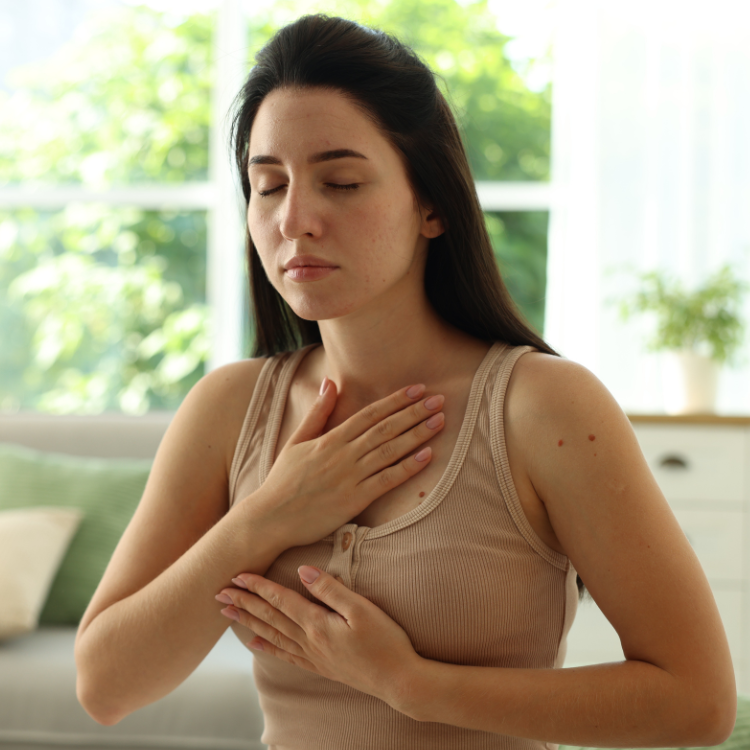
Sometimes stressful situations are unavoidable. But, not all stress is bad. The key to experiencing stress is learning to cope with stressful situations. Many dancers are not equipped to navigate stress when they experience it. And this can have a significant toll on dancer mental health. The good thing is that we (educators and guardians) can help them! (And we can hopefully work on our own responses to stressful situations as well.)
When dancers experience a more intense stress response, for instance, forgetting a routine onstage and running off, they don’t often see or hear clearly because their bodies are in “run from a threat” mode. This can be difficult when we want to help them regain a more calm state. Here is one way to help dancers in the moment when they are experiencing a stress response.
It starts with encouraging dancers to focus on the present. The 5–4–3–2–1 exercise below is a widely-accepted coping technique for anxiety and it’s an easy one to incorporate when you’re with a dancer in a stressful situation.
Here’s how you can try it. First, try to calm your breathing. Find a comfortable place to sit and relax as much as possible. Then, one by one, focus on the following things:
- Find and identify five things you see around you. Really see them.
- Find and identify four things you can feel (i.e. the fabric of your pants on your legs, your hair on your neck, etc).
- Find and identify three things you can hear.
- Find and identify two things you can smell (i.e. your deodorant, fresh coffee in the kitchen, your pets, etc).
- Find and identify one thing you can taste (i.e. your lunch or your toothpaste).
The University of Rochester Medical Center’s website says, “This five-step exercise can be very helpful during periods of anxiety or panic by helping to ground you in the present when your mind is bouncing around between various anxious thoughts.” Bringing dancers’ attention to the sensory aspects of their surroundings can take away that fear that can get in the way of performing, learning, and (most importantly) having fun.
Final Thoughts
Michelle Loucadoux
Michelle Loucadoux Fraser has performed in 5 Broadway shows including The Little Mermaid – OBC, Ariel u/s; Anything Goes – Hope Harcourt u/s; Mary Poppins – OBC, Beauty and the Beast (Babette u/s), & Chance and Chemistry. She danced in 4 ballet companies, on film and television, and has traveled the world empowering young artists. Michelle is the co-chair of the dance division at AMDA, is a published author (Rowman & Littlefield – I’m Talented, Now What? - 2020), has an MBA, is a mom, and is passionate about dancer mental health.

Get in Touch!
hello@danscend.com
Phone number: 213-770-1226
hello@danscend.com
Phone number: 213-770-1226
Copyright © 2026